


Where to stand, what to swing, and what to dig — from the dry sand down to chest-deep surf.
Beach metal detecting is one of the best ways to find jewelry — especially rings. Beaches get constant traffic, and tides and storms constantly move sand, which can expose targets that were out of reach the day before. But ocean beaches are also one of the hardest environments for metal detectors because saltwater and wet sand create interference that makes the wrong machine noisy and shallow.
This guide gives you everything: the best beach detectors for 2026, the three-zone framework for reading the shoreline, how to set up your detector, how to recover targets fast, and the etiquette, timing, and gear that separate consistent finders from everyone else.

Table of Contents
- Quick Picks: Best Beach Detectors
- Shop the Best Beach Detectors
- The Three-Zone Framework
- Why Beach Detecting Is Different
- Where to Hunt on the Beach
- Best Times to Hunt & Tide Windows
- Beach Settings That Actually Work
- Beach Scoop Guide
- Fast Recovery Technique
- How to Find More Gold Rings
- Code of the Swing: Beach Etiquette
- Common Mistakes
- Rinse & Maintenance
- FAQ
- Glossary of Terms
Quick Picks: Best Beach Metal Detectors (2026)

- Best Overall: XP DEUS II — deepest waterproof rating, extremely lightweight, excellent salt performance
- Best for Most Hunters: Minelab Equinox 900 — proven wet-salt stability and strong value
- Best Flagship: Minelab Manticore — advanced target info, excellent depth and separation
- Best Value Multi-Frequency: Nokta Legend 2 — strong beach performance at a lower price
- Best Budget Waterproof: Nokta Simplex Ultra — affordable, beginner-friendly, capable on dry sand and light wet-sand
If you only want one recommendation: choose a waterproof simultaneous multi-frequency detector if you hunt ocean beaches (wet sand/surf). For freshwater beaches and dry sand, you can get away with less — but waterproofing still makes beach life easier.
Shop by category: Waterproof Metal Detectors | Pinpointers | Sand Scoops & Diving Tools | Headphones | Pouches & Carry Bags

Shop the Best Beach Detectors
Best Overall: XP DEUS II


The XP DEUS II is the “hunt-anywhere” beach detector. It stays stable on wet salt sand, separates targets quickly in trashy areas, and its deep waterproof rating makes it ideal for surf hunters and serious water work. The biggest bonus: it’s extremely light, which matters on long beach hunts.
- Best for: ocean wet sand, surf, underwater, long hunts, trashy beaches
- Why it wins: stability + separation + comfort + deep waterproofing
- Pro tip: if you hunt the surf zone, pair it with a long-handle stainless scoop so waves don’t steal your target.
Shop XP DEUS II | Shop Sand Scoops & Diving Tools
Best for Most Hunters: Minelab Equinox 900


The Equinox 900 is a top “one detector for everything” choice. It runs smooth on wet salt sand, hits jewelry well, and is versatile enough to use on beaches, parks, and fields. If you want strong beach performance without paying flagship pricing, this is the safe bet.
- Best for: most beach hunters (dry + wet sand), shallow water, beach + land use
- Why it wins: proven salt stability + strong depth + excellent value
- Pro tip: carry a small coil option for towel-line trash (foil/pull tabs) and a larger coil for wide coverage.
Shop Equinox 900 | Shop Headphones
Best Flagship: Minelab Manticore


The Manticore is for hunters who want premium performance and richer target information. On busy beaches where aluminum is everywhere, better target nuance can help you decide what to dig without missing the good stuff. It’s a serious tool for serious beach time.
- Best for: experienced hunters, trash-heavy beaches, maximum information
- Why it wins: advanced target ID + separation + depth
- Pro tip: don’t “ID hunt” too hard — gold overlaps trash. Use target consistency and location to decide.
Shop Minelab Manticore | Shop Pinpointers
Best Value Multi-Frequency: Nokta Legend 2


The Nokta Legend 2 is a value powerhouse: true multi-frequency performance with beach-ready features at a price below many competitors. If you want ocean-beach capability but need to stay budget-conscious, this is the move.
- Best for: wet sand + surf on a budget, beach hunters upgrading from entry-level
- Why it wins: beach stability + performance per dollar
- Pro tip: pair with a pinpointer and a good scoop to keep recoveries fast — speed matters on productive tide windows.
Shop Nokta Legend 2 | Shop Waterproof Pinpointers
Best Budget Waterproof: Nokta Simplex Ultra


The Simplex Ultra is a strong starter detector for beach hunting, especially if you’ll spend a lot of time on dry sand and want full waterproof peace of mind. On ocean wet sand, multi-frequency machines generally run smoother — so consider this a great entry point with a clear upgrade path.
- Best for: beginners, dry sand, freshwater beaches, occasional wet sand
- Why it wins: waterproof + affordable + easy to learn
- Pro tip: focus towel lines, paths, and volleyball courts first — high reward, low hassle.
Shop Simplex Ultra | Shop Finds Pouches
The Three-Zone Framework: How to Read the Shoreline
The beach is not one environment. It’s three — and the detectorists who consistently out-find everyone else are the ones who recognize which zone they’re in and match their tool and technique to it. If you work the beach like a single stretch of sand, you leave most of the finds behind.

Zone One — The Dry + Damp Sand (Difficulty: ★)
The upper beach: from the dune line down to roughly the high-water mark. This is where beachgoers set up towels, kids dig holes, vendors walk past, and sunscreen-slick fingers lose rings. The damp band just above the wrack line — that dark strip of seaweed and shells left by the last high tide — is the transition zone between dry and wet, and it’s where light targets wash up and stall. Best gear: Equinox 900, Legend 2, Simplex Ultra. Best tide: Any.
Zone Two — The Surf Line (Difficulty: ★★)
From the high-water mark down through the wet sand and into the wash. This zone resets with every tide: lighter material moves, heavier material sinks and stays, and post-storm cuts (steep vertical drop-offs in the sand profile) expose ground that hasn’t seen the sun in months. This is the most productive zone on most beaches — and the one most weekend hunters don’t bother with. Best gear: XP DEUS II, Manticore. Best tide: Low tide ± 2 hours, post-storm.
Zone Three — Submerged, Past the Sandbar (Difficulty: ★★★)
Chest-deep and beyond. Past the break, past the first sandbar, into water that’s been settling heavy targets for twenty, fifty, sometimes a hundred years. Fewer hunters reach this ground because it takes an underwater metal detector, a partner, and a tide window you have to earn. Best gear: XP DEUS II (to 66 ft), Minelab Excalibur II (to 200 ft), Fisher Impulse AQ. Best tide: Dead low on a new or full moon spring tide.
More on each zone below: where to hunt, when to hunt, and how to set up.
Why Beach Detecting Is Different (And Why Some Detectors Fail)
1) Saltwater is conductive
Ocean wet sand contains saltwater. Saltwater acts like a massive conductive “target,” and many detectors respond by chattering, falsing, or losing depth. That’s why simultaneous multi-frequency (SMF) and true beach modes matter: they help the detector ignore salt while still seeing metal. For the deepest submerged work, pulse induction (PI) detectors ignore salt almost entirely.
2) Wet sand and black sand add mineral interference
Wet sand often contains mineralization (and sometimes black sand). Mineralization can distort target IDs and reduce depth. A beach-capable detector stays stable and keeps better sensitivity to small gold.
3) Beaches are target-sorting machines
Waves don’t move sand randomly — they sort targets by density and shape. Heavy items like rings and coins tend to settle and concentrate along certain lines. If you learn to recognize these zones, you’ll waste less time and find more keepers.
Where to Hunt on the Beach (High-Probability Zones)
Towel line (dry sand)

The towel line is where people sit, remove jewelry, apply sunscreen, and shake towels. It’s the best “fresh drop” zone. Work parallel passes and widen the grid where you find modern coins, hairpins, or lots of pull tabs — those are human-activity markers.
Paths, entrances, and choke points

People lose items while walking with bags, kids, chairs, and towels. Look for the routes from parking lots to the sand and from sand to water. These areas can be quietly productive, especially early morning.
Wet sand “coin line”

The wet sand zone is where many beaches concentrate heavier targets. Look for a repeatable band where you find multiple coins or sinkers in a short stretch. When you find it, slow down and grid it.
Cut lines (post-storm)
After a nor’easter, hurricane remnant, or big sustained swell, the beach doesn’t look the same. The wave action sometimes shaves the beach flat (bad for detecting — the good ground is now buried deeper) and sometimes cuts it open (very good — decades of accumulated targets exposed in a vertical sand profile). Work along the top of the cut, along the base, and in the trough just offshore. Cut lines are the single most productive condition in beach detecting.
Swim zone and shallow water

Gold rings are commonly lost where people are active: swimming, tossing balls, diving, and playing. Cold water shrinks fingers; waves and motion loosen rings. If you have a waterproof detector and the right scoop, this is often the best gold-producing area. For chest-deep and beyond, see our underwater metal detector lineup.
Best Times to Hunt & Tide Windows

- Low tide: exposes more sand and gives access to zones that are normally underwater.
- Early morning: less competition and better chance at fresh drops from the day before.
- After storms (when safe): storms can strip sand and expose older, deeper targets.
- Off-season: reduced detecting pressure; winter patterns can move sand in your favor.
- New & full moon spring tides: water pulls back the furthest, exposing ground that doesn’t normally see air.
If your schedule is limited, do this: hunt the towel line early morning, then spend the rest of your time in wet sand near the waterline as tide drops.
Tide Window Quick Reference
| Window | Tide | Grade |
|---|---|---|
| −2 hrs before low | Low | ★★ |
| Dead low | Low | ★★★ |
| +2 hrs after low | Low | ★★ |
| Post-storm | Any | ★★★ |
| New/full moon spring | Spring low | ★★★ |
| High tide | High | ★ (towel line only) |
Beach Settings That Actually Work (Simple, Practical)
Exact settings vary by detector, beach, and conditions, but these principles are consistent across successful beach hunters:
Use the correct beach mode
If your detector has multiple beach modes, use the one designed for wet salt sand when you’re in the wet zone or surf. Dry sand can often be run hotter; wet sand usually needs a more controlled setup.
Stability beats maximum sensitivity
A stable detector at slightly lower sensitivity will often find more than a chattery detector at max sensitivity. If you’re getting constant falsing, lower sensitivity until it smooths out.
Keep discrimination reasonable if you want gold
Gold rings can read like foil, pull tabs, and nickels. If you “notch out” too much, you’ll miss gold. Many ring hunters dig more repeatable mid-tones and let the scoop do the filtering.
Recovery speed and iron bias
On trashy beaches, faster separation helps. In mixed targets, avoid overly aggressive iron filtering that can mask gold near iron. If you’re not sure, start moderate and adjust based on what the beach is giving you.
Helpful add-ons: Headphones | Pinpointers
Beach Scoop Guide (This Is Your Money Tool)

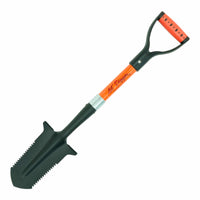
A quality scoop is not optional if you want consistent success in wet sand and surf. Without a scoop, targets get lost in collapsing holes, waves refill your dig spot, and recovery becomes slow and frustrating. With a scoop, you can recover fast and keep your coil moving.
Long-handle scoop vs hand scoop
- Long-handle scoop: best for wet sand and water. Saves your back and recovers faster before waves fill the hole.
- Hand scoop: best for dry sand, travel, and quick sessions. Lighter, but slower in water.
Stainless steel vs aluminum
- Stainless steel: the serious choice. Strong, durable, better in packed wet sand, shell layers, and rocky spots.
- Aluminum: lighter and often cheaper; fine for soft sand but can bend under heavy use.
Scoop hole size and shape
- Bigger holes drain faster (great in water), but very small targets can slip through if holes are too large.
- Smaller holes hold small jewelry, but drain slower.
- A sharp nose/edge helps cut into packed wet sand.
Shop Sand Scoops & Diving Tools
Fast Recovery Technique (How to Not Lose Targets in the Surf)
- Pinpoint quickly: short wiggles to center the target. Don’t overthink it.
- Scoop behind the target: in wet sand, targets can “roll” toward the water. Place the scoop slightly behind where you think it is.
- Take a full bite: one deep, committed scoop is better than three shallow ones.
- Shake and check: drain sand, then pass the coil over the scoop or pile.
- Use a pinpointer: it speeds up recovery and reduces the time you’re standing in waves.
Shop Pinpointers | Shop Waterproof Pinpointers
How to Find More Gold Rings (Realistic Strategy)

Gold is not a “perfect ID” target
Gold jewelry overlaps common trash signals. If you only dig “perfect coin IDs,” you will miss gold. The best ring hunters use a combination of repeatable audio, location, and timing to decide what to dig.
Hunt where rings come off
- wet sand near the waterline
- swim zones and shallow water
- entry/exit points
- towel line (fresh drops)
Look for “stacking” signs
If you find multiple coins, sinkers, or repeated mid-tone hits in a short stretch, you may be on a productive line. Slow down, shrink your grid, and work that pocket thoroughly.
Work in a grid, not a wander
Wandering feels fun, but gridding finds more. Pick a lane, overlap swings, and finish a section before moving. Most gold comes from thorough coverage, not luck.
The Code of the Swing: Beach Etiquette
This part is non-negotiable. Get it right or we all lose access to beaches, permit by permit, closure by closure. The hobby’s future on public beaches depends entirely on detectorists behaving well.
1. Fill every hole. Every single one.
A detectorist’s hole in the dry sand is a tripping hazard to the next beachgoer. A detectorist’s hole in the surf is invisible and dangerous. Fill it, pat it down, move on. No exceptions.
2. Pack out every trash target.
You dug it, you own it. Pull tabs, bottle caps, corroded pennies, foil — all of it comes home with you.
3. Give other hunters 30 feet of space.
Don’t crowd a cut. Don’t follow someone’s grid. Don’t detect between a hunter and the water.
4. Know the permit rules before you drop a coil.
Every coastal state is different. Public beaches may allow detecting above the mean high-water line; state parks, national seashores, and national parks often prohibit it entirely. Call the local parks office before you swing.
5. Return obviously personal finds.
Engraved rings, class rings with legible dates, military dog tags, anything with a name. Post it in local lost-and-found Facebook groups, call the park office, make a reasonable effort. Karma pays in rings.
Common Beach Detecting Mistakes
- Swinging too fast: depth and target ID suffer. Slow down.
- Coil too high: keep it low and level for maximum depth.
- Over-discriminating: you’ll miss gold. Keep it reasonable.
- Ignoring wet sand: that’s where many older, heavier targets settle.
- No scoop: recovery becomes slow, targets get lost, and surf hunting becomes miserable.
- Skipping post-storm windows: the best beach days are the ones other hunters stay home for.
Rinse & Maintenance After Beach Hunting
- Rinse detector, coil, and shaft with fresh water after every saltwater hunt.
- Pay attention to cam locks, coil bolts, and connectors (salt likes to hide there).
- Dry before storage. Store somewhere cool and out of direct sun.
- Check seals and O-rings regularly if you submerge your detector.
More gear: Shovels, Diggers & Picks | Carry Bags & Pouches
Beach Metal Detecting FAQ
Can you metal detect on the beach?
Yes, on most public beaches in the United States, and in many other countries. The specifics vary by location: public beaches in most U.S. states allow detecting above the mean high-water line without a permit, while state parks, national seashores, national parks, and many private beaches either require permits or prohibit detecting entirely. Always check with the local parks and recreation office before you swing. “I didn’t know” is not a defense when a ranger writes you a ticket.
What is the best metal detector for the beach?
For most hunters, the Minelab Equinox 900. It handles saltwater beautifully, hits hard on gold, and is priced where most people can actually afford it. For serious chest-deep divers, the Minelab Excalibur II is still the benchmark. For cut-line specialists working wet sand hard, the Minelab Manticore has the best target trace in the business.
Do I need a waterproof detector for beach hunting?
If you only hunt dry sand, waterproofing is optional. For wet sand and surf, waterproofing is strongly recommended. Even “dry sand only” hunters get splashed eventually. The full breakdown by depth rating is on our waterproof metal detectors page.
Do I need multi-frequency for the beach?
For ocean beaches (wet sand and surf), multi-frequency is strongly recommended for stability and depth. For freshwater beaches, single-frequency can work well, but multi-frequency still helps on tough sand and small jewelry.
What about hunting past the surf — do I need an underwater detector?
Once you are past chest depth, you have left beach detecting and entered underwater detecting — different machines, different ratings, different technique. That world gets its own full write-up: see our underwater metal detector guide for dive-rated machines from the 16 ft snorkel class down to the 250 ft Fisher CZ-21. The short version for beach hunters: the XP DEUS II covers Zone Three to 66 ft, and the Minelab Excalibur II is the machine when the water is the whole mission.
What’s the difference between VLF, SMF, and PI metal detectors?
VLF (Very Low Frequency) runs a single frequency. Great for dry-ground coin and relic hunting. Struggles in saltwater.
SMF (Simultaneous Multi-Frequency) — also called Multi-IQ, FMF, and other brand names — runs several frequencies at once and cancels saltwater’s signature while preserving metal targets. This is what you want for most beach hunting.
PI (Pulse Induction) transmits short pulses and reads the decay. It ignores salt and ground mineralization almost entirely and sees deeper on heavy targets. The tradeoff is almost no discrimination — you dig everything. Best for Zone Three.
Should I dig all signals?
If your goal is gold rings, dig more repeatable mid-tone signals — gold overlaps trash. Use location and repeatability as your filter.
How deep do metal detectors actually find targets?
In optimal soil, a good modern detector reaches 8–14 inches on a coin-sized target. On a saltwater beach, depth drops because of ground mineralization — often to 6–10 inches on a coin. PI machines see substantially deeper on larger targets in Zone Three.
Will saltwater ruin my metal detector?
If it’s rated for saltwater, no. If it’s not, yes — instantly. Rinse thoroughly with fresh water after every saltwater hunt and let it dry fully before storing.
What is a “cut” and why does it matter?
A cut is a vertical shift in the sand profile caused by wave energy — usually a storm. Years of accumulated targets that were buried get exposed at or near the surface of the cut face. Cuts are the single most productive condition in beach detecting.
Glossary of Beach Detecting Terms
BBS — Broad Band Spectrum. Minelab’s multi-frequency technology in the Excalibur II.
Clad — Modern coinage made of layered metals. Common on any beach used in the last 60+ years.
Cut / Cut line — A vertical shift in the sand profile caused by storm or wave action, exposing previously buried targets.
Discrimination — A detector’s ability to distinguish between target types.
FMF — Fast Multi Frequency. XP’s multi-frequency technology in the DEUS II.
Ground balance — A detector setting that adjusts for soil mineralization.
Low conductor — A target with low electrical conductivity (gold, small jewelry, aluminum).
Multi-IQ — Minelab’s simultaneous multi-frequency technology, used in Equinox and Manticore.
PI — Pulse Induction. See FAQ.
SMF — Simultaneous Multi-Frequency. See FAQ.
Target ID — On-screen estimate of target type, based on conductivity.
Towel line — The band of beach where beachgoers most commonly set up. Best-producing zone for modern jewelry on dry sand.
VLF — Very Low Frequency. See FAQ.
Wrack line — The debris line left by the most recent high tide — usually seaweed and shells. Target density increases in the damp band just above it.
Final Recommendation
If you want the best beach detector for all conditions, choose the XP DEUS II. If you want the best “most people” pick with proven performance and value, choose the Minelab Equinox 900. If you want flagship performance and advanced target information, choose the Minelab Manticore. If you want strong multi-frequency beach performance for less money, choose the Nokta Legend 2. If you’re starting on a budget and want waterproof simplicity, choose the Nokta Simplex Ultra.
Suggested add-ons: a stainless long-handle scoop for wet sand/surf, a pinpointer, and a finds pouch.
We ship detectors daily from our Michigan warehouse, we’re authorized dealers for every major brand, and we answer phones and emails from real detectorists who hunt. If you want a second opinion before you pull the trigger on a machine, call us at (844) 771-0707 or email support@seriousdetecting.com.
Shop Waterproof Metal Detectors | Shop Sand Scoops & Diving Tools | Shop Pinpointers | Shop Headphones | Shop Pouches | Complete 2026 Buyer’s Guide
See you out there.